Posts

A few things about kata bunkai- and the application of forms in other martial arts

Image
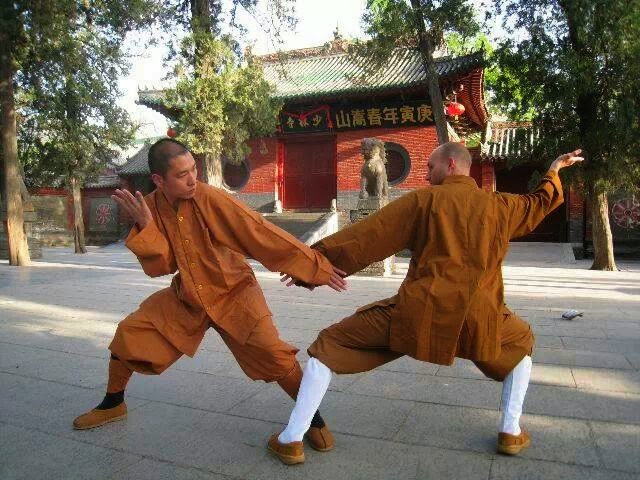
http://www.youtube.com/watch?v=YCH6pCzyT4g https://www.facebook.com/groups/taichisecretmovements/ I always believe that if you really want to know the essence of any style- you should study its kata. Styles without kata- well... it's just that much less fun. So far- I have been lucky enough to have an instructor who taught me the application of each movement in the kata I have learnt. I have also learnt later on that not all forms are a rehearsal of combat techniques. Often the kata in itself is an exercise to develop speed or power. In this post I will give a couple of hints on understanding kata better. Here are some pointers: 1. A slow kata is meant to develop power and technique. This means that you pay should pay attention to aspects such as your stance and breathing, when your muscles have to be relaxed and when which muscles have to tense. 2. Fast katas are meant to develop speed and agility. This is no chance to take shortcuts through movemen...

Range

Image
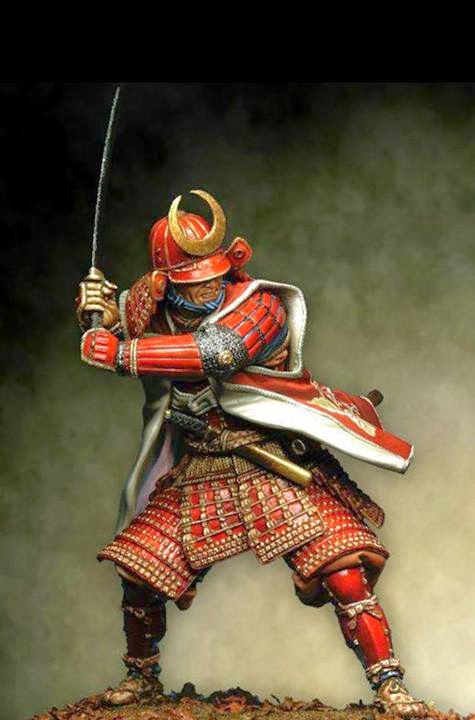
Depending on the type of competition or whether it is a real fight or competition it is very important to know what  distance is close enough to touch the opponent and what range is close enough for some real damage. This fight probably comes to anyone's mind when we think about fighting a taller opponent. The Legendary Musashi Miyamoto is said to have fought a samurai called Kojiro. Kojiro's advantage in combat lay in his sword, which was longer than what was the norm at the time. Musashi, however, remedied the situation by beating Kojiro to death with a wooden oar which he had modified to fight with. I am not going to deal with projectile weapons and guns here. Everyone knows that the range of those is far longer than even a 7 foot staff can muster. What I will discuss, however, is what assumptions about range are wrong- and even dangerous- and which approaches deliver the best results.  First of all- It is not always a good idea to stay out of your o...

Many different ways to skin a tree- A perspective on different styles of martial art.

Image
Judo is not the only grappling art, neither is Taekwondo the only art that uses kicking.  It would also help to know that the developers of most of these arts we see today had something to work from. Now kung fu fanatics would be quick to tell us that "all martial arts under the sun come from Shaolin", but that statement ignores the fact that the Thai and Indonesian people have been kicking and punching long before Shaolin even existed. So did a lot of people in Asia, actually... Karateka would actually also have to admit that their styles are a lot younger than jujitsu and Chinese martial arts (in other words- kung fu). This knowledge has been lying around in my mind gathering dust, but may be new and useful to some who are considering which martial art to take up. I'll give a list below of some of the most well known main styles and their most obvious attributes- along with the arts that had developed from them: Japan (Tradition: Buj...

What good is training alone?

Image
Bruce Lee himself was more than willing to do away with katas, but definitely not sparring. He also referred to shadow boxing as "homework for sparring". I am certain that a lot of coaches and instructors will also tell you that you can't expect to be a competent fighter without sparring. I agree to a certain extent- as you will need to have some data on what to expect in a real fight. One training tool I wish to introducein this post is the imagination. I did give a short reference to it in a post of a couple of years ago, but never spoke about how to use it in a way that works. I have left our Shotokan dojo in 1998. From this time I have been practicing by myself. The first things I have discarded were the katas that were always the same pattern of techniques, but not quite the stuff that would get me out of trouble. From that point on I began imagining attacks of all kinds against me during practice. I'd feel the panic of being cornered, the qui...

The difference between a weapon and a target

Image
Where other people would read about a thing such as "mind over matter" and continue doubting whether they could ever attain something like that we as martial artists are in a position to practice and train with it and experience it first hand. We already know the value of conditioning. Some of us will know about skills such as Shaolin's "Iron Shirt" and "Golden Bell Cover" and may still not know how to develop the ability. Well- I reserve that kind of knowledge for my students. Something I will leave for my fellow martial artists to contemplate however is this: When is a body part a target and when is it a weapon? Short answer- It depends on how qi is focussed. A more understandable explanation would be more like this: If you accidentally bump your hand against a table while rushing off somewhere in a hurry- it hurts. When, however, that hand is used to break a board or a tile- it does not hurt (or at least not that much...) What was differ...

Isometric stretches

Image
To many of us stretching is that bit we do after training to get rid of gathered lactic acid and to relax the muscles. These stretches, however, are not that kind of stretch at all. They are meant to enable you to kick high and also to develop kicking power. The effectiveness of the exercise lie therein that one is isometrically stretching the muscles on one side of the body while the other side is being exercised isometrically. The stretches take on the form of three basic kicks, the front-, side- and back kick. These kicks all have one thing in common- they drive into the target. To do each stretch you have to stand far enough from a wall so that you have to overextend to reach it with your foot. The more flexible you are-the further away you may stand. Then the foot is placed against the wall. This is where you push against the wall as hard as you can, holding the position of any of these kicks as shown in the sketch. 20 seconds on each position, with each leg, should be enoug...

Martial Art Technique is meant to improve one's natural movements in combat, not to restrict it and not to replace it.

Image
I think all of us who have gone to a dojo at some stage in their lives know about someone like this in class- a boy or girl who has received belt after belt in gradings and whose basics and kata are exemplary, but whose kumite is really bad and who- to be frank- just can't fight...  True- The disadvantage may in many cases be psychological, but another poison- which is especially fed to students who have never fought before in their lives, is that those blows, kicks, blocks (oh don't get me started on blocks...) and stances are effective for use in actual combat. Truth, however, is that they aren't. Why do we practice them this way then? I have actually given the answer to this question a couple of posts ago when I discussed the three elements in martial arts. Now those techniques are supposed to develop power when practiced regularly. As for technique itself, you really have to find that element in the technique that makes it work, preserve it and make...